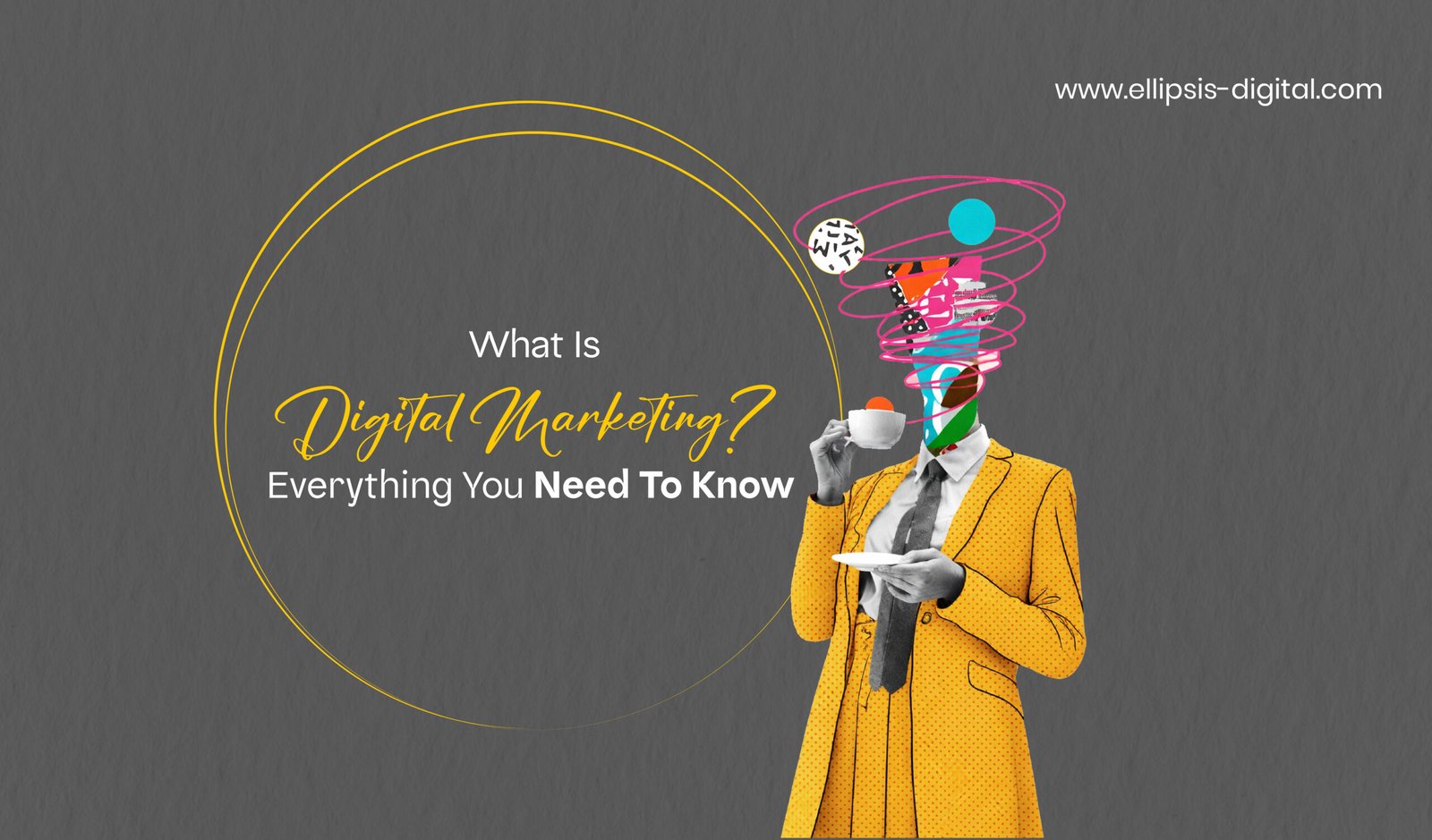
Everyone has an opinion on digital marketing. Ask ten people and you’ll get ten different answers, half of which sound like they were pulled from a textbook nobody actually finished reading. So let’s talk about what it actually is, what it isn’t, and why getting that distinction right matters more than most businesses realise.
The Simple Answer Nobody Gives You
Digital marketing is using the internet to get your product or service in front of people who are likely to buy it. That’s genuinely it.
The complicated part is that the internet isn’t one place; it’s search engines, social platforms, inboxes, streaming services, YouTube rabbit holes at 1 a.m. and everything in between. Digital marketing is identifying where your customers spend their time and appearing there with something worthy of their attention.
People spend over six hours online every day. That’s not a casual number, it’s most of their non-working and non-sleeping hours combined. Your customers are online. The only question is whether you’re meeting them there or leaving that space wide open for someone else.
Why Does It Actually Matter?
Global digital ad spend is projected to hit $870 billion by 2027. That number doesn’t exist because brands are chasing a trend. It exists because digital marketing does things traditional marketing genuinely cannot.
It gives you real data on who clicked, when, from where, what they did after and where they dropped off. You can see exactly where your money is working and where it’s being wasted, while the campaign is still running.
It reaches further for less. A well-targeted digital campaign can reach exactly the right person anywhere in the country for a fraction of what a newspaper ad costs. And unlike the newspaper ad, you’ll actually know if anyone saw it.
It keeps working. A blog post written two years ago can still bring in traffic today, an email list built last year can still convert next year. A lot of digital marketing compounds long after the initial work is done.
Digital Marketing Channels, Explained Simply.
Think of digital marketing channels the way you’d think of different roads leading to the same destination. Each one gets you there differently, at a different speed, and at a different cost. Here’s what each one actually does.
SEO (Search Engine Optimisation)
You know how, when you Google something, a list of websites shows up? SEO is the work that gets your website on that list.
Say you sell handmade leather wallets. When someone types “handmade leather wallet” into Google, SEO is what determines whether your website appears on page one or page seven. Page seven doesn’t exist in practice; nobody goes there.
It involves things like writing content around the words your customers are searching for, making your website load fast and getting other websites to link back to yours. None of it is instant. You could be working at it for six months before you see movement. But once you rank, you don’t pay for every click the way you do with ads. It builds quietly and keeps paying off.
SEM / PPC (Paid Search)
This is the faster, paid version of showing up on Google. Have you seen those results at the very top of a search page with a small “Sponsored” label? That’s PPC.
You tell Google: “I want to show up when someone searches for a handmade leather wallet.” Google runs a quick auction behind the scenes and if your bid and ad quality are good enough, your ad appears. You pay only when someone clicks.
The upside is that it’s immediate. You can set up a campaign today and have traffic tomorrow. The downside is that it stops the moment you stop paying. Think of SEO as a well you dig over time, and PPC as a tap you rent. Both have their place.
Content Marketing
Imagine someone Googles, “how to care for a leather wallet?” Your website has a well-written blog post on exactly that topic. They read it, find it useful, notice you sell leather wallets and bookmark your site for later.
That’s content marketing. You give people something genuinely useful before asking them to buy anything. Blogs, newsletters, videos, podcasts and guides. It builds familiarity and trust over time, so when someone is finally ready to buy, your name is already in their head.
HubSpot built an entire business this way. Free courses, templates and resources are all offered to people who would eventually become paying customers. It takes time and it takes consistency, which is why most brands quit too early.
Social Media Marketing
This one you already know, at least as a user. Instagram, LinkedIn, Facebook and Reddit. Social media marketing is when businesses use these platforms to stay in front of their audience, build recognition and eventually drive people toward buying something.
The advantage is scale. Over 6 billion people will be on social media by 2028. The challenge is that the platform controls what gets seen and the rules change without warning. You’re building on rented land. This doesn’t mean you shouldn’t do it: it’s just that you shouldn’t rely on it exclusively.
Video Marketing
Almost 70% of video is watched on mobile. People watch a 60-second clip and decide whether they trust a brand before they’ve visited a single page of the website. Video builds familiarity fast because a real person is talking, explaining and demonstrating. Text can’t do that at the same speed. You don’t need a studio or a production budget. A clear point and decent lighting will take you further than most brands get.
Influencer Marketing
Say there’s a creator on Instagram with 30,000 followers who reviews everyday carry products. Their audience trusts their taste because they’ve been watching them for years.
If that creator genuinely likes your leather wallet and talks about it, their audience listens in a way they never would to a brand ad. That’s influencer marketing. You’re borrowing someone else’s credibility to reach an audience that already trusts them.
Roughly 61% of Gen Z and millennials trust influencer recommendations. And smaller creators, those with 10,000 to 50,000 followers, often outperform much bigger names because their audience is tighter and the relationship is real. The one thing that kills it: writing a script for the creator to read word for word. The moment they stop sounding like themselves, the audience clocks it immediately.
Affiliate Marketing
Affiliates are people who promote your product through their own platforms, whether that’s a blog, a YouTube channel or an email list and earn a commission when someone buys through their link.
You’ve seen this without realising. “Here’s my discount code” at the end of a YouTube video? That’s affiliate marketing. You only pay when a sale actually happens, which makes it cost-effective. The management side gets complicated as you add more affiliates, but the model itself is straightforward.
Email Marketing
Someone visits your website and signs up for your newsletter. Now you have direct access to their inbox and they put themselves there. No algorithm decides whether they see your message. No platform changes its rules overnight. Email returns $36 to $42 for every dollar spent. That ROI exists because the audience opted in. They want to hear from you. That’s a different kind of attention than someone who saw your ad mid-scroll and half-registered it. The access is valuable, which means abusing it with daily promotional blasts is a fast way to lose it.
OTT Advertising
OTT stands for over-the-top, which just means streaming platforms: Netflix, JioHotstar and Amazon Prime. 40% of Indian households have at least one streaming subscription and a quarter of those are on ad-supported plans. OTT advertising lets you place ads on these platforms the way brands used to advertise on TV, but with better targeting. The limitation is tracking. It’s harder to know whether someone who saw your ad on a streaming platform actually went and bought something afterwards.
SMS Marketing
Brands collect phone numbers from customers and send them deals, reminders or updates directly to their phone. Studies say 90% of these texts are opened within three minutes. That open rate beats email significantly. The challenge is that people are protective of their numbers and for good reason. To get someone’s number, you need a clear reason and a real incentive. Spam their inbox and they’re gone permanently.
Why Can’t You Just Pick One?
Your customer doesn’t find you through one channel and immediately buys. They Google something, land on a blog post, check their Instagram, scroll away, get an email two weeks later, and finally convert. Every touchpoint either builds trust or quietly loses it. Brands using three or more channels in a single campaign see 287% higher purchase rates, because that’s how people actually make decisions. This is what omnichannel marketing means. Not being everywhere. Being consistent wherever you are.
How To Build A Marketing Strategy
Most digital marketing strategies fail because their foundation is shaky. To succeed, you must first define exactly who you’re talking to. For example, men in sales, late twenties to mid-thirties, with a specific income and a problem only your product can solve. That level of specificity changes every decision you make downstream.
Set goals you can measure. “We want to grow online” is an intention, not a goal. “We want to increase website conversions by 20% by Q4 through SEO and PPC” is something you can work towards. Track metrics that connect to revenue: conversion rate, cost per acquisition, and click-through rate.
Start small, pick one or two channels that match your audience, run something focused and read the data before spreading the budget thin. The fear of picking the wrong channel is exactly how brands end up on every channel and are effective on none.
Digital marketing isn’t a setup. Platforms shift, audiences change and something that worked eighteen months ago might be underperforming now. The brands that stay ahead are the ones that keep looking at the numbers instead of assuming yesterday’s strategy will carry tomorrow.
Key Takeaways
- Digital marketing is reaching the right person, on the right platform, at the right moment. The channels are just the roads that get you there.
- SEO is slow and compound; PPC is fast and stops when you stop paying. Most businesses need to run both at the same time.
- Content marketing works on trust before it works on conversion. It takes longer than brands expect and pays off longer than they realise.
- Smaller influencers with tight audiences outperform bigger names almost every time. The relationship with their audience is what converts, not the follower count.
- Email has the highest ROI of almost any channel because the audience chose to be there. That opt-in attention is the most valuable kind.
- Start with your audience, not your channels. Everything else follows from knowing exactly who you’re talking to.
FAQs
Do small businesses need digital marketing?
More than large ones in some ways. The internet doesn’t charge more based on your size. A well-targeted blog post or email campaign from a small brand can outperform a generic campaign from a much larger one.
Which channel should a business start with?
Wherever the audience already is. If they’re searching for what you sell, start with SEO or PPC. If they’re on Instagram or LinkedIn, start there. Pick based on audience behaviour, not on what feels right.
How long does it take to see results?
Depends on the channel. PPC can show results within days, whereas SEO takes months. Content takes even longer. Set expectations by channel rather than by digital marketing as a whole, otherwise you’ll quit the things that were about to work.
Is a digital marketing agency worth it?
If your strategy isn’t converting and you don’t know why, an agency gives you access to skills and experience you’d spend years building in-house. If things are working, you probably don’t need one. Most businesses are somewhere between those two.
Conclusion
Digital marketing is an ongoing work of understanding where your customer is, what they need and showing up there with something that earns attention before it asks for money. The channels are tools, the strategy is what determines whether those tools build something.
At Ellipsis Digital, strategy comes before a single caption is written or a campaign goes live. If you want to talk about what that actually looks like for your brand, that’s exactly where we’d start.